The Seam Ripper Is Your Friend
No sewist wants to talk about it—but every sewist does it………
For many sewists, the dream of spending an uninterrupted afternoon at the machine — fabric laid out, coffee within reach, creative energy flowing — remains just that: a dream. Between work, family, chores, and the general chaos of daily life, finding a long, peaceful block of time to sew can feel impossible. And when those golden hours never materialize, projects start to stall. Half-finished dresses linger on dress forms. Cut fabric piles up in neat but untouched stacks. Ideas fade before they reach the needle. It’s no wonder so many passionate hobbyists quietly confess: I haven’t sewn in weeks — maybe even months. But here's the good news: you don’t need hours to move forward. With a shift in mindset and some practical adjustments, sewing in short bursts can not only keep your projects alive — it can keep your creativity thriving.
Sewing often comes with a built-in sense of ceremony. Clear the table. Set up the tools. Wait until you have “enough” time. But this expectation of big, immersive sessions can backfire. If you can’t sew for two or three uninterrupted hours, you may decide not to sew at all. Days become weeks, and creative momentum fades. Yet, many sewists who successfully integrate sewing into their lives swear by the opposite approach: small, consistent steps.
Much like exercise or journaling, sewing benefits from routine over volume. A focused 20 minutes can be just as productive — sometimes more so — than a distracted afternoon.
One of the most helpful shifts is thinking in “windows” instead of “blocks.” A time block is rigid: two hours on Sunday afternoon, or not at all. A time window is flexible: 15 minutes while dinner is in the oven, 10 minutes after the kids are in bed, or a 30-minute burst before work. By identifying these windows in your existing routine, you unlock pockets of creative time you didn’t know you had. You may not finish a whole garment in one sitting — but you will finish it, one step at a time.
✔ Today: Cut out the front bodice.
✔ Tomorrow: Interface the collar.
✔ Next session: Pin and sew shoulder seams.
List your steps in order, and check off each one. Even five minutes is enough for something like changing thread, winding a bobbin, or marking notches.
The biggest time-waster in short sessions? Setup and takedown. If you can, dedicate a corner for sewing that stays ready-to-go. No need to reassemble your station each time. Just sit, sew, and walk away when time’s up. No permanent space? Use a rolling cart or large tray to keep your tools and current project together. Easy to pull out, easy to put away.
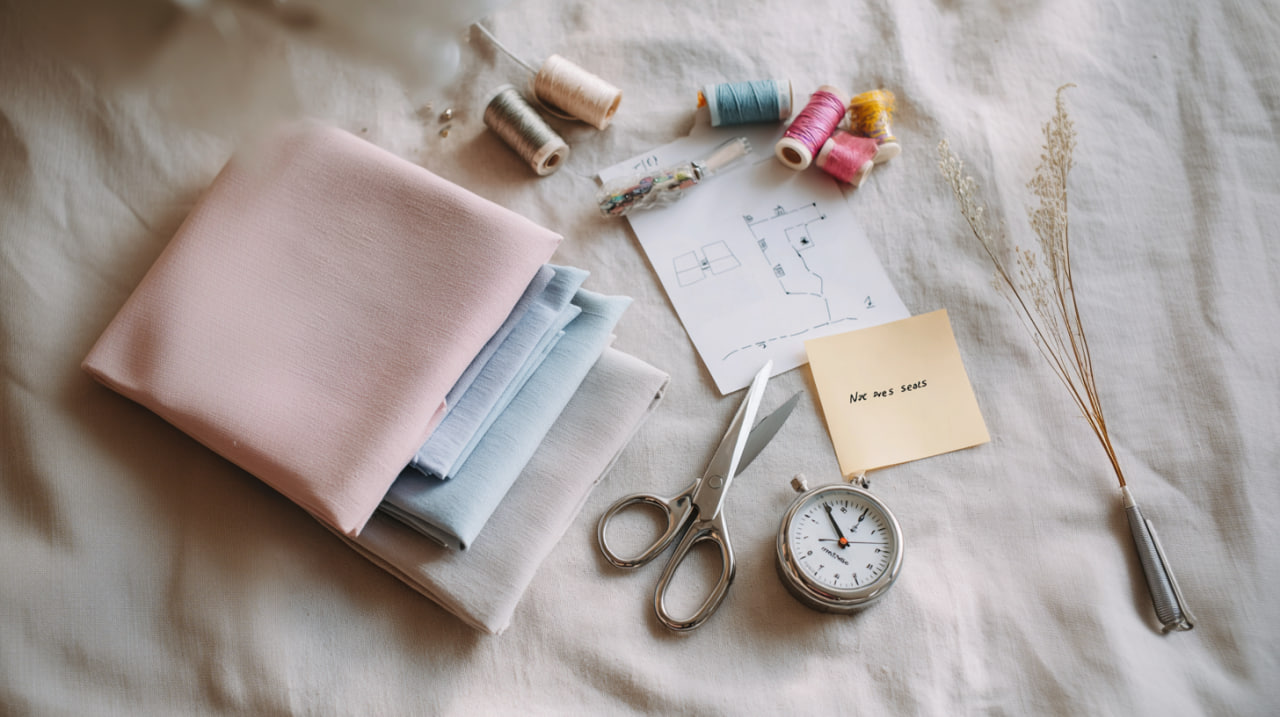
When time is short, distractions matter more. Set a 15- or 20-minute timer and
challenge yourself to stay fully present. You’ll be amazed at how much you can accomplish when your mind isn’t wandering.
Before ending a session, write a quick note: “Next — sew side seams.” This small act
removes decision fatigue and helps you re-enter the project quickly next time.
If you’re working on multiple projects (or even the same pattern in different fabrics),
batch tasks like cutting, pressing, or pinning. You’ll get more done in less time — and
save your energy for the fun parts.
It’s easy to believe sewing must be an all-or-nothing activity. But the truth is, your
machine doesn’t care how long you sit down. One seam a day is still progress. A
finished garment doesn’t ask whether it was made in one weekend or one month.
Short sessions also lower the pressure to “get it perfect.” When time is limited, your
focus narrows. You’re more likely to complete one task well than rush through five with mistakes.
Life gets busy. Projects get interrupted. But that doesn’t mean creativity has to wait.
By embracing shorter sewing sessions, you give yourself permission to enjoy the craft
on your own terms. You build habits, finish more projects, and keep your passion alive — one stitch at a time.
Because sewing isn’t about having time. It’s about making time — and using it well.

No sewist wants to talk about it—but every sewist does it………

You’ve carefully cut the fabric. You’ve followed every step of the pattern instructions. ……